Showing posts with label Books. Show all posts

Friday, November 29, 2013

In Which I Make a DIY Book Scanner

$500 diy book scanner kit
After I heard that there were attempts to commercialize a book scanner that consisted of two glasses, lights and cameras, I figured that somebody on the interwebs might have had some prototype that they would like to get rid of. What I found instead was a whole bunch of DIY book scanners, some as crappy as a piece of cardboard and a glass (like this one), some a little more complex, and some just crazy awesome (this beauty is a project from a non-profit. At $500, I can just imagine what they would have to sell it if they actually wanted to make money out of it. Anyway, it might just be the perfect graduation present *wink*).

Mine's not that great, but it does the job. It's pretty slow, but mostly because I don't have the awesome cameras that these guys have. I had to take the pictures with my cellphone, and for better quality I took them with a little app called TiniScan, which converts the picture into high contrast black and white images. That, of course, is awesome, but it does it as you're saving the picture, so it takes like 30 seconds to convert and save each image. The nice thing is that there isn't much post-editing.

In one of the scanners I saw online (and that now I can't find for the life of me), the glass thingy that flattens the book pages for better photographing were connected to a pole with rollers that went up and down, but I thought that was too complicated for me to do—I don't have the tools nor the skill required—, which is a bummer, because I really liked the idea. But as I was working on my computer at work I realized that the monitor stand did just that: go up and down at a distance of about 10 inches on a straight roller. I then went to the thrift store in my way home and found a monitor with a stand that didn't do exactly what the one at work did, but it did something similar, and it was good enough (it kind of bends down instead. See video below). I then built the glass box: I screwed two acrylic plates into two triangular pieces of wood (1/2 inch thick), then screwed one of the wood triangles to the monitor stand, and voila. I also made a base where to rest the book. That is still made of cardboard, but the wooden version is coming.

Since I don't have some fancy cameras to use, I built a rest/craddle for my cellphone on a piece of wood resting inside the glass box. I tried a tripod, but even when I shorten the legs all the way, they're still too far from the book, which messes up the image quality.

Lighting of course is very important, so I got a lamp with a halogen bulb and hung it from the ceiling above the scanner.

This is the final result:

The glass box with the cellphone rest

Glass box connected to monitor stand. The cardboard base is underneath it

Bottom view of glass box. The black sheet on the opposite
side of the page being photographed makes it easier to edit the images

The book on the cardboard base. The glass lowers into the book, flattening
the pages

The lowered glass flattening the book page

Cellphone on the rest/craddle


Halogen light on $3.00 lamp from Savers


The scanner in action. Sorry it's sideways. My iPad's tripod adapter is landscape, and Vine doesn't like that.

Here's my second book scanned. It's more like a pamphlet, so it's a short one. I OCR'd it, so it's text searchable.

Tuesday, June 12, 2012

Old LDS Treasures

Like old Mormon books? Check out my eBay store!

First item sold: Jesus the Christ, 1922 edition.

Most impressive item ever: Mormon Doctrine, green, second edition, signed by Bruce R. McConkie.

Personal favorite: 1958 Relief Society Magazine.

The one I don't understand how it's taking so long to sell: No Man Knows My History, first edition (cheap!).

Author's funniest name: Paul Cheesman.


Monday, June 27, 2011

Why I'm a Girl on Etsy

After I bought my first e-reader for Christmas (a now already old generation Barnes and Noble Nook), I was broke, but I still wanted a cover for it. I thought it would be pretty cool to hollow out a book and use it as a cover, so I looked online how to do that, and after a few months, I think I'm close to being decent. My first hollow book was ok. The Nook fitted well and it looked nice, especially because I gutted the newest Garrison Keillor book. Sad. I'm never doing that again.

I then found some cheap hard covers at Hastings ($1.00. Not bad) so I got a bunch and made some hollow books out of that. I then found brand new books at Barnes and Noble for $2.00, so I got some of those as well. I now use whatever looks nice and it's big enough. I had seen some leather journals at Ross and TJ Maxx that I thought would make nice Nook covers, but since I was looking for a journal for myself, it took me forever to find something I could carry around without feeling self-conscious, or without having to justify my sexual orientation. I finally found a really nice brown leather journal with a flap with snap-on buttons, which I got at once and proceed to destroy.

I kind of messed it up with that coin


As I kept going back to the store to find more of those awesome looking journals, I kept finding pink, flowery, cutesy journals that I wouldn't find myself dead carrying, but I figured that other people would like to, more specifically women, you know. So, once I had more hollowed out journals that I knew what to do with, I finally opened my Etsy store. Since my hollow books ended up being quite cutesy, I decided to make an equally cutesy banner, so I decided to conceal my name from it, and the fact that I'm a guy! Hey, it's all about the money. And the fact that it's a lot of fun to make these hollow books. So yeah, I'm a girl on Etsy.

See what I mean?


By the way, the store's address: http://www.etsy.com/shop/hollowbooks. Check it out. They're cheap!

Most of my hollowed books are journals, but I will do an actual book now and then. I thought it would be fun to look for interesting words as I carved, and then I put them together in a kind of MadLibs sort of way. This is what I came up with after butchering A Summer of Butterflies:

Remordimiento literario - Literary Guilt

__ ¡En Español! ________________________

Mientras más aprendo de literatura, siento que tengo que leer más y más libros. ¿El problema? Que soy un lector muy vago, y lento, y lo que es peor, acabo de comprar un libro llamado "1001 libros que debe leer antes de morir". Un bajón. Y eso que el libro ese no incluye a Shakespeare, y a la mayoría de los escritores en español que vale la pena leer, así que la lista es en realidad el doble de larga. Si consideramos que lea un libro cada dos semanas, calculo que voy a terminar de leer esos 2000 libros cuando tenga 116 años. Algunos libros van a llevarme más tiempo, así que redondeemos a 120 para estar seguros.

Ojalá pudiera convencerme de que en realidad no es necesario, que puedo ver la películal, o algo así, y que eso sería suficiente, pero después de ver todas las versiones de El Principe y el Mendigo o Wuthering Height, me alegra de que leí los libros primero, así que eso no ayuda. Hay otras peliculas como Harry Potter, o el DaVinci Code, o los libros de Stieg Larsson que si uno las ve, no le hace falta leer el libro, porque no se perdería nada, pero esos libros no están en mi lista de libros para leer, asi que eso tampoco ayuda.

Un libro que he estado de leer por años es el Ulises, de Joyce. Lo empecé tres veces. La primera vez intenté leerlo sin ninguna ayuda, pero terminé aburrido, confundido, y curioso, porque no tenía idea de lo que había acabado de leer. Después imprimí el resumen de los capítulos de Wikipedia y traté de usarlos como un "bastón" para ayudarme, pero no sirvió mucho, ya que me perdí como el 80% de las referencias en el libro. Finalmente usé las SparksNotes (libros que tienen resumenes y análisis de los capitulos generalmente usados por estudiantes vagos que no quieren leer el libro). Como es un libro finito, lo pegué atrás de una de las versiones de Ulises que tengo, y leí los resumenes y análisis antes de cada capítulo, y a pesar de que entendí la historia (más o menos), todavía no entendí las referencias. La primera página del capítulo 3 me llevó como una hora y me parece que es una historia de la creación del mundo, aunque ni Wikipedia ni SparksNotes mencionan nada de eso. Hay un podcast dedicado al libro, pero después de un año de podcast semanales, el autor cubrió solamente el primer capítulo del libro, y no quiero esperar los 18 años que el proyecto parece que va a llevar. ¿Y por qué trato tanto de terminar el libro? Porque está entre los mejores libros en todas las listas que he visto, y TENGO que saber de que se trata, o por qué es tan importante. A veces desearía que pudiera ser como mi maestra de griego en la facultad, a la que le pregunté durante un final, "¿Leyó el Ulises de Joyce?" "No", me respondió. "No tengo tiempo". Que lindo ser así.

Es cierto que hay algunos clasicos que son tan grandes que podrían parar la puerta de una catedral, y sin embargo lo más importante en esos libros es la historia y no el lenguage. Me imagino que los libros de Homero en el original griego deben de haber sido increíbles en la belleza del idioma y la poesía debe de haber sido conmovedores, pero cuando leo las versiones en inglés o español, todo eso parece haberse perdido, y todo lo que nos queda es la historia. Por supuesto que finalmente lo acepté despues de haber leído las primeras 180 páginas de las 330 de mi edición de la Ilíada. A diferencia del Ulises, que es dificilísimo de entender, la Ilíada es simplemente difícil de leer porque tiene tantos detalles que hacen que el libro sea lento y aburrido. Uno aprende los nombres de todos los soldados que todos los otros soldados matan, sus países de origen, el nombre del padre de cada soldado, y la manera en que murieron. Después de haber leído casi la mitad del libro, decidí que si leo un buen resumen de cada capítulo va a ser suficiente. Por supuesto que hay capítulos que uno tiene que leer, como la pelea entre Aquiles y Hector, o cuando Priam va a buscar el cuerpo de su hijo y tiene que negociar con Aquiles, pero los capítulos de las batallas se pueden facilmente saltear y uno no se pierde mucho.

Me imagino que esa culpa que siento por no leer más viene de algun tipo de problema mental que adquirí como consecuencia de leer demasiadas traducciones mediocres de buenos libros, o por comer tanto chinchulín de chico. Quién sabe. Lo que sí sé es que si puedo encontrar una justificación para NO LEER esos 2000 libros antes de morir, voy a tener una vida mucho más agradable. Como diría Kanye West, "Yo no leo libros. Yo hablo con la gente y escucho sus historias directamente". Perdón, ¿dije Kanye West? Ignoren eso, por favor. Después de todo, todavía me gustaría comunicarme con frases y oraciones enteras y no haciendo ruidos como cavernicola, así que creo que voy a seguir leyendo. Además, no puedo empezar a imaginarme dónde va el coso ese si quiere aprender algo de historia antigua, ya que todos sus protagonistas ya estiraron la pata. Pero realmente necesito encontrar una manera de deshacerme del constante remordimiento cada vez que veo mis "bibliotecas." Y desafortunadamente Kanye West y su logica infalible todavía no me han ayudado.

__ English, please! ____________________

The more I learn about literature, the more books I feel I NEED to read. The problem? I'm a lazy reader. And I'm slow. And to make things worse, I just bought a book called "1001 Books You Must Read Before You Die." Now that's encouraging. And that book doesn't even include Shakespeare, or any of the most amazing Spanish writers, so the list is probably twice as long as that. Considering that I may read one book every two weeks, that means I'll read those 2000 books (there will be a bunch of new books I want to read. "The Psychopath Test," for example, is in my personal list and it just came out) by the time I'm 116. Of course some books take longer, and at times my Nook may run out of battery, so let's round at 120, just to be sure.


I really wish I could convince myself that that's really not necessary, that I can just watch the movie, or something, and that's be enough. But then, after watching all the versions of "Wuthering Heights," I'm really glad I also read the book, so that doesn't help. Of course you can just watch the Harry Potter movies, or the "girl" movies ("The Girl with the Dragon Tatoo" and so on), or any Dan Brown or John Girshman movie and you won't miss anything, but those books don't even make the list of books I want to read, so that doesn't help either.


I really tried to read Joyce's "Ulysses." I started it about three times. The first time I tried to just read it back to back without further ado, but that just let me bored, confused, and curious, since I had to idea what I had just read. Next, I printed out the chapter summaries from Wikipedia and went at it with that help, but that didn't make much of a difference, since I still missed about 80% of all the references in the book. Finally, I tried the Sparks Notes (I actually bought them and glued them to one of my copies of the book), and it helped me understand what the plot was, but I still didn't get any of the references. I now found a 24 hour lecture on the book which will hopefully help me get through it and actually say that I got it. There's also a podcast dedicated to the book, but after a year of weekly posts, the author only covered the first chapter, and I really don't want to wait 18 years before the project is finished. And why do I go through all that trouble? Because Ulysses is at the top of every serious book list in the world, so of course I have to read it. I so wish I could be like my college Greek professor, to whom I asked during an oral final test once, "Did you read Joyce's Ulysses?" "No," she responded. "I don't have the time." Lucky.


But then, there are some classics that are so big they could stop a cathedral's door and yet are mostly about the plot. I know, I know, if you read Homer's books in the original Greek they're probably beautiful, and the poetry is probably moving, but I haven't read any translation that moves me with its very words to the level that other books in their original language have done. To me, the Iliad and the Odyssey are mostly about plot. Of course I found that out after I read the first 180 pages of the total 330 in my edition. What I did was to read the plot summary on sparksnotes.com and then read the chapter, to make sure I understood what was going on. Unlike Ulysses, which is terrible hard to understand, the Iliad is quite simple, but what makes it hard to read is the painful description of each soldier's family background. Half what I've read so far is an account of who killed whom, literally, with the names of the soldiers, the name of the country they came from, and the name of their fathers. I have decided, at this point, that after reading a few kids' versions, I can just read the Sparks Notes and I will know exactly what the book is about. So, instead of taking a month to read that, I can take 30 minutes. It took me about three weeks to figure it out (I told you I was slow), but I'm most definitely not spending another three weeks finishing it, and however long the Odyssey was going to take me. Of course there are chapters that I need to read, like the battle between Hector and Achilles (they did a beautiful reading of that chapter on Selected Shorts, which makes me think of what those old retelling of the book might have been like in the ancient Greece), and the chapter where Priam goes to get his son's body from Achilles. Other than that, you can skip all the battle scenes and read a summary instead and you'll be fine.


So there you go. I imagine that my self-inflicted book related guilt trips may be related to some kind of mental issue I've acquired while reading too many crappy translations of good books, or by eating too much cow intestines as a kid, who knows. All I know is that if I can find ways to justify NOT READING those 2000 books by the time I die, I will have a lot more time to enjoy life. Or like Kanye West would say "I don't read books. I rather talk to real people and hear their stories." Did I say Kanye West? Nevermind, I would still like to be able to communicate with actual words instead of mumbling, so I'll definitely keep reading. Besides, I can't begin to imagine who he would need to talk to if he wanted to learn something about ancient history, since, you know, they're all dead and stuff. But I really need to work on a way to get rid of the guilt! Unfortunately, Kanye's flawless logic ain't done it yet.

Wednesday, April 06, 2011

Some Old Books I Finished This Week

The Warrior Woman, by Maxine Hong Kingston

Kingston's Tripmaster Monkey is one of my favorite books ever. The Warrior Woman is pretty amazing as well. A classic, for what I hear :) - I love how Kingston mixes up family stories with traditional Chinese legends and mythology. After all, don't we all do that, regardless what culture we belong to? If you're a story teller and like to include cultural elements in your narrative, it's pretty convenient to belong to a culture as rich and exotic as that of China. Otherwise, make stuff up, like Kingston admits to doing at times. After all, like she complains to her mom in the last chapter of the book, "I don't know what's real and what are just stories!" But then, who cares, right?

A Study in Scarlet, by Sir Arthur Connan Doyle

After getting over myself and deciding that Sherlock Holmes is real literature (after reading dozens of young adults and children books, my standards have lower considerably), I started reading the Holmes cannon, starting with the first story, which is one of the four novels in the Holmes series. The rest forty or fifty something are short stories.

My first surprise was to find out how similar Doyle's and Robert Downey Jr.'s Holmes are. It's true that Sherlock Holmes never fought giant French guys or was an action hero, but he was a boxer, and somewhat of an irreverent slacker. Watson was lazy too, according to his own words.

My second surprise: this book trashes Mormons like no other. It actually reminded me of a silent movie I saw a while ago in which Mormon missionaries went to other states and countries with the purpose of kidnapping women to turn them into sister wives. Doyle goes after the Danite Band, a sort of army that protected Mormon settlements against random attacks, and which, according to Mormon history, didn't even exist anymore once they moved to Salt Lake, which is where Doyle locates them. Second, he goes after Brigham Young pretty viciously, making him a grumpy, cunning dictator who forces people into joining the church and marrying as many wives as possible. One of my favorite passages of the book:

"Brother Ferrier," he said, taking a seat, and eyeing the farmer keenly from under his light-coloured eyelashes, "the true believers have been good friends to you. We picked you up when you were starving in the desert, we shared our food with you, led you safe to the Chosen Valley, gave you a goodly share of land, and allowed you to wax rich under our protection. Is not this so?"

"It is so," answered John Ferrier.

"In return for all this we asked but one condition: that was, that you should embrace the true faith, and conform in every way to its usages. This you promised to do, and this, if common report says truly, you have neglected."

"And how have I neglected it?" asked Ferrier, throwing out his hands in expostulation. "Have I not given to the common fund? Have I not attended at the Temple? Have I not——?"

"Where are your wives?" asked Young, looking round him. "Call them in, that I may greet them."
The book is one of those historical fiction/detective (obviously) stories with a conspiracy twist. An early DaVinci Code of sorts, with as little investment on research and everyhing.

Wednesday, March 23, 2011

Books I Read...

I've been posting books there in the side of the page as a way to see how many books I read in a given year. I was surprised to see how many had accumulated at the end of the year, and that helped me get motivated to read even more. The reviews I write are not about the book (you can read that on Amazon, or barnesandnoble.com), but my reaction to it. A basic, couple of lines, response. It's extremely subjective (especially if you've read some of my politics books' reviews, you know what I mean), but oh well, it's my blog! And nobody reads it anyway, so what's the big deal, right? But I've decided that if it's not a 25 page book for first grade readers, I might include the reviews in the body of the blog, otherwise I'll update this once a year, and that's pretty pathetic.

So, here's my response to the last book I've read.


Kira Kira, by Cynthia Kadohata. YA (272 pp.).

A couple of years ago, a student kept telling me that we should read this book as a class. So I was glad to have found it at overdrive.com. It's a cute book, and the historic part of it doesn't seem forced, as in Esperanza Rising, but the sister part of the narrative, well, I saw that coming from the first chapter, so it felt that the author dragged it too much. The rest of the book is a built up to that, so it didn't work for me, but I see how it might have worked for a kid.

Wednesday, December 29, 2010

Books I Read on 2010

I'm pretty sure I won't be finishing any more books this year, so I might as well do this now.

I made it to 46! Of course, I had more time to listen to some audio books on my way to work, so the word "read" is somewhat loosely used. Reading them on my Kindle and Nook apps on my phone made it easier as well.

Monday, December 20, 2010

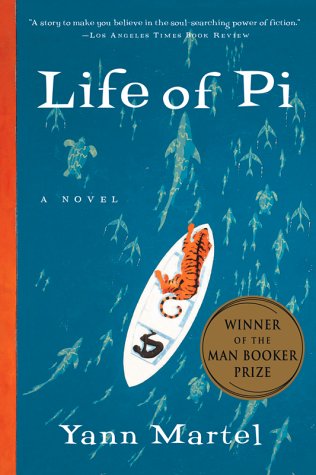
Life of Pi + Common Nonsense

Life of Pi, novel by Yann Martell

I kept seeing this book in every thrift store I ever went to, so I finally got it and read it. I hated it so much I wish I hadn't even bothered. But at least it caused a strong enough impression that I felt I needed to write about it.

The book begins well enough. There are long descriptions of animals and animal life, which are actually fascinating. The author then describes his quest to find a religion at a very young age, and this part sounds quite uninformed and simplistic. If I hadn't read later that this book was the author's attempt to make sense to his life through some kind of search for spirituality, I would seriously consider that this was his attempt to demonstrate how silly and petty religions were, and, therefore, unnecessary.

Sunday, November 28, 2010

David Sedaris at Sam Wellers

Last night David Sedaris read part of his book at Sam Wellers and then signed books. The reading took about 45 minutes, and it was hilarious. He read portions of an unpublished story about some flies that ate vomit, and how one of them was so stuck up and pretentious because she had eaten the deputy governor's wife's puke. It was genius. He then did a Q&A, and some of the questions were so stupid that they made me cringe. Some examples were:

- How's your sister?
- How's your brother?
- If you could be a mythological animal, what would you be?
- Have you gone to the Louvre?

Painful.

He was good, though, and gave great little monologues loosely based on the questions, so he fixed the awkward moment and made it good.

The signing went really smoothly. He chatted with everyone for a few minutes and was very gracious. If I had to mention my one complaint, it would be the jokes. When he did the reading, he read some jokes that people had shared with him, and that was all good, but when he was signing people's books he started telling us jokes, and I wasn't crazy about that. It just felt very juvenile. It all felt like a desperate attempt to be funny and charming. I understand that it is hard to come up with funny stuff to say all the time, but then, he didn't have to. Just being there, saying hello and signing my book would have been perfect. But, oh well, the guy did an awesome show and that's what we went there for, and it was exciting to actually talk to him after hearing his voice on tape for so long.

Here's his answer to the question "Have you ever heard of the Church of Jesus Christ of Latter Day Saints?" Sorry about the crappy audio. I'll probably add subtitles eventually.

Friday, July 09, 2010

Why I Hate Percy Jackson

I recently finished reading the second Percy Jackson book and the first Artemis Fowl, two young adult novels (well, more like young young novels), and although they share some elements, Artemis Fowl was pretty good, while Percy Jackson is stupidly dumb and I hate it so much that I feel like kicking it until my feel fall off.

You see, a few years ago I still felt I was too good for young adult books. I mean, I read Shakespeare and Poe for fun when I was 14! (Mostly because my parents couldn't afford kids books for me and all they had were old copies of those books that they inherited from their parents.) I never even wanted to see the cover of a young adult book, until Meg and I listened to Because of Win Dixie on a trip to Washington, and I was sold. Of course, there are amazing YA books, and there is absolute crap, like everything else. Harry Potter is no Nobel Prize in literature, but it's decent. The writing is ok and sometimes actually kind of exciting. Percy Jackson, on the other hand, is a badly written, boring, unfunny rip off of Harry Potter. And if you don't believe me, check this out:

1. A young orphan (semi-orphan in PJ's case) boy who has special powers and doesn't know about them until he goes to this school where he's taught how to use his powers. By the way, he's also the chosen one, and even though he's not super smart, he's the cat's pajamas! (Harry/Percy)

2. A girl who also has powers and who is very, very smart becomes friends with the main guy and saves his butt a million times. Even though she's very smart, she's not as special as the guy, but she's ok with that (Hermione/Annabeth)

3. A friend guy who is not as bright as the main guy or his girl friend, but he is very noble and trustworthy (Ron/Grover)

4. There's even a super evil character who the main guy has to fight (and he's the only one who can fight him!). He beats him in every book, but never badly enough to get rid of him until, I assume, the last book (Voldemort/Chronos)

There's even an invisibility cape and half bloods on both books.

But that's not my main problem with the book, it's just that it's badly written. There are so many parts that are supposed to be funny, and they are NOT; so many parts are supposed to be sad and melancholic, but they are just cheesy and ineffective. There's a part, for example, where the author might have thought "Oh yeah, I'm writing about the gods of nature, so maybe I should throw in some environmentally conscious remarks," so he did, really quick (like one sentence), and went on. It was a pathetic attempt.

You might wonder why then did I read TWO of these crappy books. Well, so many people said that the second one was much better than the first one that I gave it a try (some of those people were my 6th grade students, so that should've told me something...). Also, I just heard it on audiobook, so it wasn't so painful or such a waste of time, but I wonder what did the people who saw me yell at my iPod think.

Artemis Fowl, on the other hand, is kind of similar. A 12 year old criminal mastermind decided to steal gold from fairies in order to restore his family's fortune (he's not an orphan, but his parents are out of the picture. He also goes on the archetypal quest when he steals from the fairies, like Harry Potter, Percy Jackson, and every fantasy protagonist does). Sounds lame, huh? Definitely not as cool as reading about the adventures of Poseidon's son among Greek gods and demigods. But the author worked it out in such a way that the book is interesting, exciting, funny, and just plain good.

After HP, PJ, the Twilight series, and a bunch of other crappy YA fantasy books I've read, I was ready to give up on them, but AF was so good that I might at least give some of them a try in the future.

Friday, January 01, 2010

Books I've Read This Year

I made it to 38. Most were young adult books (1st, because I took a YA class in college, 2nd, because I want to be able to recommend good books to my students, and 3rd, because the covers are so awesome!), so they were easy to read, but many of them were really awesome. I read a lot of crap (O'Reilly's book was particularly stupid. But of course I was biased before I started it. Not too crazy about hatred in print), and nothing particularly heady, although I read some complicated stuff in my college classes that I didn't list here because they were only excerpts. I also read some other books that I didn't list because they were too short or too dumb, to the point of being embarrassed to list them.

I was always curious of how many books I usually read a year, and 38 is not that great, but it's more than I though. We'll see how I do in 2010.

38. Fight Club By Chuck Palahniuk. I just read this because I had it in my iPod and didn't have anything else around. I loved the first 3/4 of the book. Then it got really silly. Although I already knew what was going to happen because I watched the movie, I don't like how the writer handled the main character's split personality issue, especially when the second personality starts telling the first one about his mental condition. Too Dr. Jeckyll and Mr. Hyde, but without the beautiful verbosity.

37. Pontoon: A Novel of Lake Wobegon By Garrison Keillor. I love Garrison Keillor's novels. He has this awesome ability to describe something in just a few words, and you're there. This is a great book, although nothing much happens; it's mostly recollections by the different characters, but it feels very homey. Keillor is a master of the "light" stream of conscience also. He can take you into someone's head and make you go through their thought processes, disconnected as they usually are, and still don't feel dizzy or bored. Loved it.

36. Standing Up to the Madness By Amy and David Goodman. Really great information on how to stand up against what we see as unjustices, and great examples of people who did. Couldn't help feeling at times that the book was a huge ad for the radio show, though...

35. Smiles to Go By Jerry Spinelli. Spinelli is one of my favorite YA authors. That's why I was so excited about this book. And that's why it is so disappointing that it sucks...

34. The Stonekeeper By Kazu Kibuishi. This is a YA graphic novel that one of my students' parent bought for me, which is nice, but the book is the dumbest crap I've ever read.

34. Freakonomics By Stephen Dubner and Steven Levitt. So awesome!! Like the authors say, the book doesn't have a unifying theme, just a bunch of facts analyzed and put together in a very cool way.

33. Lord Loss By Darren Shan. Another YA book. Way stupid. I'm definitely not recommending this to my students... (Although my students recommended it to me!)

32. Common Sense By Glen Beck. Holy cow, this guy is a big time conspiracy theorist! It's too bad you can't see him twitching on the book, though. It would have been funier.

31. To Kill a Mockingbird By Harper Lee. First time I read it. Such a beautiful book.

30. The Kite Runner By Khaled Hosseini. So sad.

29. Tear Down This Myth: How the Reagan Legacy Has Distorted Our Politics and Haunts Our Future By Will Bunch. Despite its title, it's not really a negative book, it just distinguishes the myths from the facts of his presidency ("Facts are stubborn things," like John Adams would say. Or "Facts are stupid things," like Reagan would say, when quoting John Adams). Reagan was good in many instances, not so good in many others. The bottom line is, he wasn't the amazing real life movie hero that his propaganda campaign made him to be. Tough book to read though: tons of technical information and lots of information in general in each page.

28. Three Shadows By Cyril Pedrosa. I thought it was stupid. But then, it's just my opinion...

27. Paul Goes Fishing By Michel Rabagliati. I got this book because I thought looked cool, and I was amazed to find out that it talks about foster care, infertility issues, etc. all in a very realistic and moving way.

26. Watchmen By Alan Moore. I loved the movie, so I figured I'd read the book. There are a few differences, but it was great also.

25.The Host By Stephanie Mayer. Triple gag. If it wasn't because it was all I had in my iPod while I worked in my yard, and because I really wanted to know what Stephanie Mayer would do in order to make this book interesting, I would've stopped listening to this after the first chapter. I wish I had. The super duper happy ending didn't help either.

24.Death Note By Tsugumi Ohba. Holy crap, that was long. It could've been done in 5 books. After that, it just draaaaaged. Spoilers: the good guys win.

23.A Bold Fresh Piece of Humanity By Bill O'Reilly. You can't say I don't try. This is probably the most irrelevant book you'll ever read. Here you will learn what you need to do if you want to be O'Reilly's friend, about the times when he mocked French club employees because of their names, about how he tortured nuns (but it was all "in good fun"), about the times he cheated his customers when he had a painting company, of the times he sabotaged his customers' ice creams when he worked at an ice cream stand, and about at least one felony he committed and of which he seems to be very proud. You'll also be surprised to learn that he likes Bush but hates Carter and Clinton. I know, I know. Shocking. Oh, and by the way, this "is not about him." How do I know, because that's the first thing he says in the book.

22.V for Vendetta By Alan Moore and David Lloyd

21.What Obama Means for Our Culture, Our Politics, Our Future By Jabari Asim: See May 3's entry

20.The I Hate Ann Coulter, Bill O'Reilly, Rush Limbaugh, Michael Savage, Sean Hannity... Reader: Edited by Clint Willis. It's funny, but since it came out four years ago, it feels pretty outdated. A new edition would be awesome.

YA Books I had to read for my class:

19.SOUE: Book 8, The Hostile Hospital by Lemony Snicket. Ditto

18.SOUE: Book 7, The Vile Village by Lemony Snicket. This book is so dumb it's not even funny,and yet, I really need to know what's going to happen next...

17.The Devil's Arithmetic by Jane Yonel: Once you get past the excruciating intro, the book gets pretty good. The ending is amazing.

16.Homeless Bird by Gloria Whelan: Grunt.

15.Little Brother by Cory Doctorow: Interesting book about losing your privacy in time of war and fear mongering. Pretty entertaining, and, best of all, it's free from Doctorow's website. I actually read the whole thing in my cell phone.

14.Out of the Dust by Karen Hesse: Incredibly depressing. It gets better though.

13.The Wish List by Eoin Colfer: It's kind of cute, but the religious part is just weird.

12.Ender's Game by Orson Scott Card: Gag.

11.Whirligig by Paul Fleischman: I saw the guy live, and he was pretty cool. This book, not so much.

10.Persepolis by Marjane Satrapi: Very, very awesome.

9.Bronx Masquerade by Nikki Grimes: I like the multi-voice thing, and the poems explaining what's in the kids heads. I'm not too crazy about the Hispanic stereotypes, though.

8.Catcher in the Rye: First time I read this. Very cool book, although the swearing gets a little annoying (I still can't figure out what's the purpose for the swearing, because there has to be one!).

7.Tangerine, by Edward Bloor: A sort of "Blue Velvet" for middle schoolers.

6.Nothing But the Truth, by Avi: This book made me mad as hell. So I guess it's really good.

5.American Born Chinese, by Gene Luen Yang: Great book about accepting who one is. Not new age crap, though, but actual literature in graphic novel form

4.Whale Talk, by Chris Crutcher: I absolutely loved this book. Until the last chapter...

3. Alcatraz vs. the Evil Librarians, by Brandon Sanderson: Even more awesome than its name!

2. Who Ran my Underwear up the Flagpole? by Jerry Spinelli: the worst Spinelli I've read!

1. Speak, by Laurie Halse Anderson: interesting

.

Sunday, May 03, 2009

Cool New Book

.

I just finished reading "What Obama Means," by Jabari Asim. And before you start rolling your eyes... well, the book is not so much about Obama as it is about the journey that African Americans had gone from the times of slavery to the present, and all the cultural and social steps that allowed a black man to be the president of the United States.

The section on black athletes, musicians, and other artists that paved the way for African Americans to be widely popular and even seen as models of what's cool is very revealing and very well done, as well as the chapter on the "Magic Negro," which explained not only what a Magic Negro is but also all that controversy with that song played in the Rush Limbaugh show.

Some random quotes I really liked:
As Maureen Dowd noted in the New York Times, "The people who want English to be the official language of the United States are uncomfortable with their leaders being fluent in it." (Page 124)

As DuBois and other have put forth, casting excessive blamo on the less educated and economically disadvantaged allows successful blacks to hide their obligations to their brethren behind by-the-bootstrap myths of self-propelled ascent. In a speech delivered in 1934 on the day he resigned from the NAACP, DuBois outlined the consequences of such mythmaking in apocalyptic terms. "If the leading Negro classes cannot assume and bear the uplift of their own proletariat," he said, "they are doomed for all time." (Page 139)

Wednesday, June 04, 2008

Anti Tom Literature

Uncle Tom's Cabin is one of my all-time favorites. It's beautifully written, and the characters are so well developed that you really feel for them when something bad happen--and a lot of bad things happen to them. It is true that the book is somewhat melodramatic (it was published serially in the time, and those kinds of publications could be compared to the soap operas of our time), and the author's agenda is quite clear. She portraits the slave in a (maybe purposely?) naive way, and the stereotypes portrayed could make cringe any modern reader. But overall is an amazing book, and a must read for every breathing being!

This book was considered the cause of the civil war because of its secessionist views, and although is was highly respected in the North, I was surprised to find out that in the South there was a whole movement of so called anti-Tom literature. Some of the most popular ones were The Planter's Northern Bride, by Caroline Lee Hentz, and The Sword and the Distaff, by William Gilmore Simms. The Planter's Northern Bride is easily available and quite cheap, but the only copy of The Sword and the Distaff is priced at almost $300.00 on Amazon.


I found a couple of links to the complete texts (here and here), though, and they are a very curious read. It's interesting to see the perspective of the Southerners of the time regarding slavery. These authors argue that the slaves were very happy in the plantations, and that if there was any abuse against slaves, it was caused by those masters who were also abusive towards their children. Slaves then equaled children, and in the authors' minds, that was perfectly fine. They say that slaves would rather die than leave their masters, and that if a slave ever left the plantations to go to the North, it was because "they have most of them been made disaffected by the influence of others-- tempted by promises which are seldom fulfilled."

As any decently written book does, the anti-Tom books give us a very clear perspective of a section of the population's opinion at the time, and how hard they tried to justify an action as horrible as owning slaves.